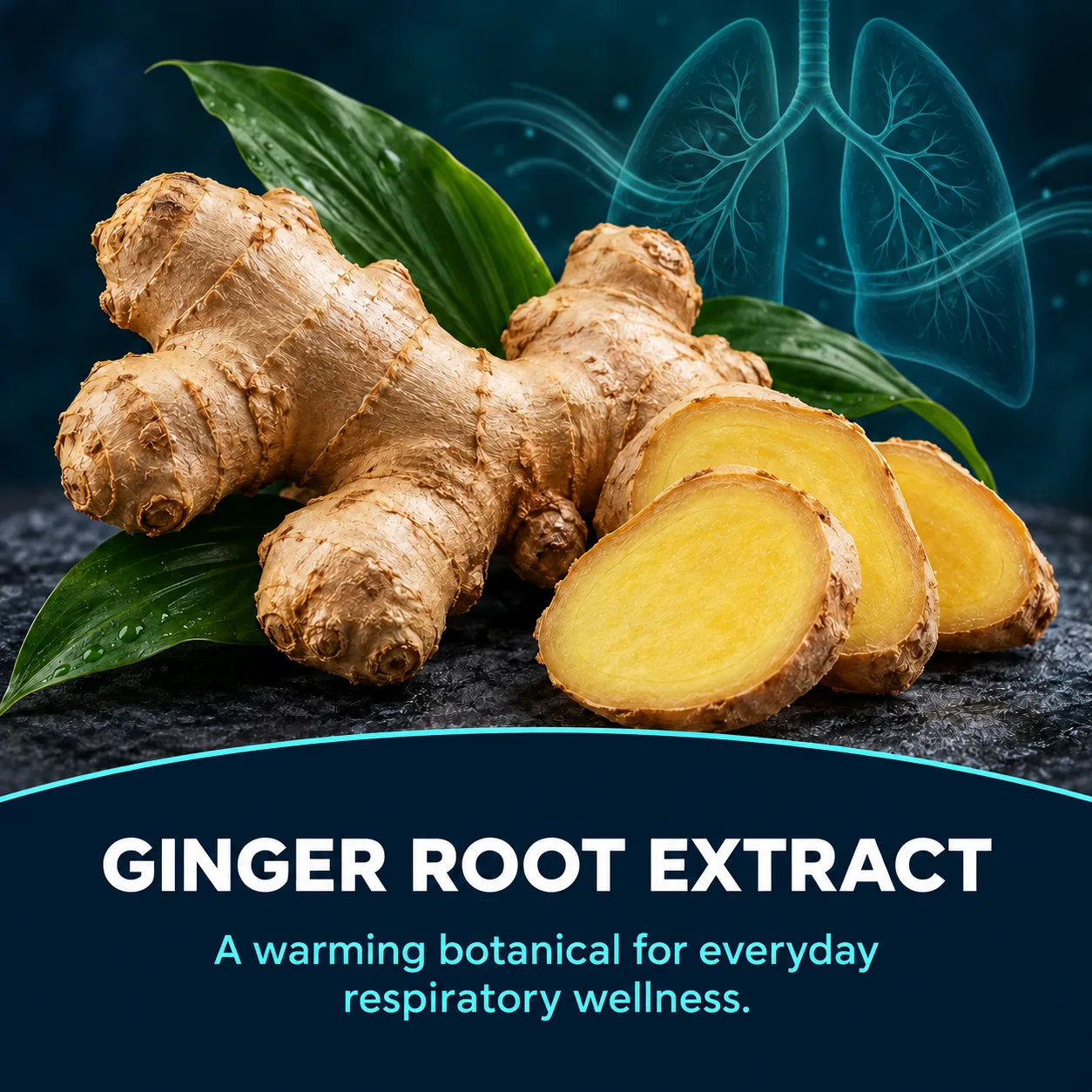
Ginger and turmeric are two of the most popular wellness botanicals in America. They're actually close relatives — both belong to the same plant family, Zingiberaceae. But they're far from interchangeable.
The key compounds
Ginger gets its warmth and bite from gingerols and, when dried or heated, shogaols. Turmeric gets its bright golden color from curcumin, its best-known active compound.
What the research focuses on
- Ginger has strong human evidence for nausea, including motion sickness and pregnancy-related nausea. Lab research has also shown its compounds can relax airway muscle tissue.
- Turmeric is studied mostly for its anti-inflammatory and antioxidant properties, particularly for joint comfort.
The absorption challenge
Both have a similar problem: the body absorbs and breaks down their active compounds quickly. Curcumin is notoriously poorly absorbed, which is why turmeric supplements often include black pepper extract (piperine) to help.
Taste and kitchen use
Ginger is spicy and zesty, perfect in stir-fries, teas and baked goods. Turmeric is earthy and slightly bitter, essential in curries and golden milk.
Safety notes
Both can affect blood clotting, so talk to your doctor before taking concentrated supplements of either if you take a blood thinner. Turmeric supplements may also not be suitable for people with gallbladder problems.
Why BreathiZen® uses ginger
Ginger's airway research made it the natural choice to pair with mullein in BreathiZen®. Turmeric is a great spice to cook with — just a different tool for a different job.
Three Botanicals. Five Seconds a Day.
Mullein, ginger and organic lemon in one great-tasting spray — backed by a 60-day guarantee.
Save Up to 73% TodayThese statements have not been evaluated by the FDA. BreathiZen® is a dietary supplement and is not intended to diagnose, treat, cure or prevent any disease. Please talk to your doctor before starting any supplement.
← Back to the Journal